How Is Whisky Made? A Complete Guide to the Whisky-Making Process
Introduction:
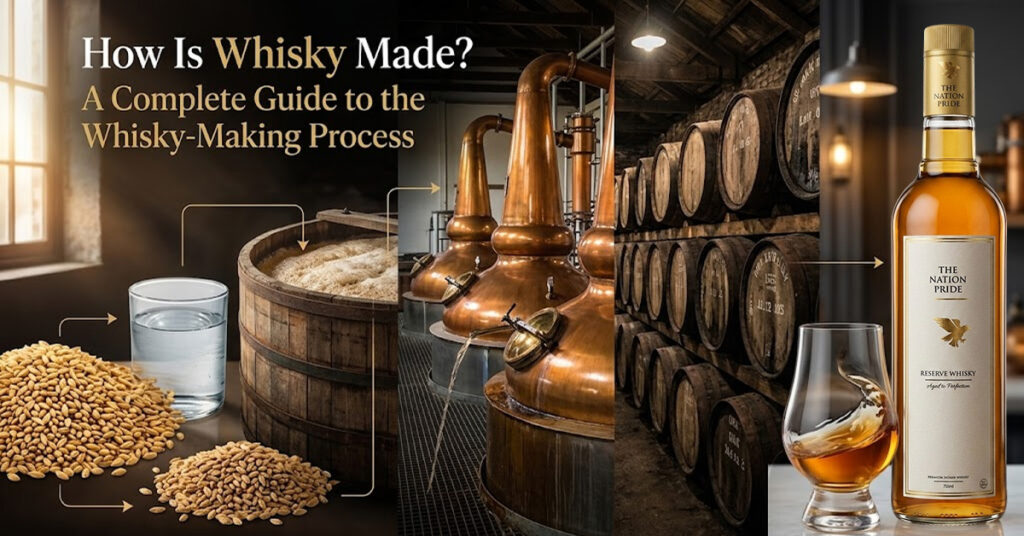
Whisky consists of only a few elements. However, its production includes several controlled stages. So, how does whisky get made? The process starts with grains and water. Next, malters, mashers, fermenters, and distillers help produce the spirit.
Producers also age whisky in oak barrels. This step contributes to the color, aroma, taste, and character of the spirit. Lastly, producers blend and bottle the whisky.
In addition, each stage may affect the character of the spirit. Thus, knowing the process of production can help whisky lovers to better understand their drink.
Which Ingredients Are Used to Make Whisky?
Whisky contains grains, water, and yeast. However, producers can use different grains to make different types of whiskies.
Examples of grains include:
Barley
Corn
Rye
Wheat
For example, producers make single malt whisky from malted barley. For example, producers make single malt whisky from malted barley.. This differs from some blended and grain whiskies because producers use different grains to make them.
Additionally, water is extremely important in the entire process of production. Lastly, yeast ferments the sugar into alcohol.
Therefore, different types of ingredients are responsible for the aroma and taste of whisky.
How Is Whisky Produced Via Malting and Mashing?
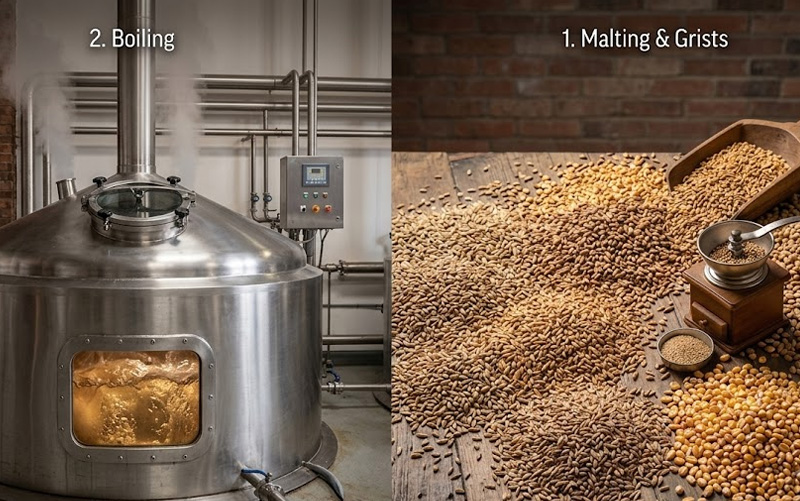
First of all, producers prepare the grain. To produce malt whisky, producers soak barley in water. Then, producers germinate the grain under special conditions.
During this process, the grain develops enzymes. Enzymes help convert starch into fermentable sugars.
Then, producers dry the malt. Depending on the desired type of whisky, producers can use different heating methods.
Then, producers mix the crushed malt with hot water. This process is known as mashing and it helps to extract fermentable sugars.
Thus, the producer obtains a liquid containing fermentable sugars called wort.
Fermentation: Converting Sugars into Alcohol
Fermentation comes after the mashing process. During this process, producers add yeast to the wort. The yeast will consume the available sugars and produce alcohol as well as carbon dioxide.
The fermentation process may differ from one producer to another and also from one type of whisky to another. This means that both temperature and fermentation time can influence the product.
In addition, fermentation produces elements that will influence the aroma and taste of the whisky.
After fermentation, there is alcohol in the mixture, but it is still not like the finished product. It becomes a beer-like product.
Distillation: Obtaining the Spirit
Distillation separates and concentrates alcohol along with other constituents in the fermenting liquid. This method uses stills to separate different constituents according to their qualities.
Most of the time, distillers control the process and select the spirit fractions they need. This process can influence the character of the whisky.
Copper stills may interact with the spirit during distillation. Therefore, this method is very important in making the spirit.
However, distillation alone cannot create the whisky. Producers should place the spirit in the right casks.
Whisky Maturation: How Whisky Acquires Its Distinctive Characteristics
Whisky maturation is among the most significant phases in whisky production. During this phase, producers put the distilled whisky spirit into oak barrels for maturation.
While in the barrels, the whisky spirit interacts with the barrel material and matures. In doing so, the spirit acquires certain flavor characteristics such as vanilla, caramel, spices, dried fruit, and oak.
Several factors may affect the resulting whisky, such as the type of cask, its previous contents, the storage environment, and the maturation time.
The spirit also undergoes considerable changes during this phase.
How is whisky turned into a finished bottle?
Upon maturity, manufacturers evaluate their whisky and make preparations for its bottling. According to product requirements, manufacturers blend various whiskies to achieve consistency.
Blending needs some precision. Blenders consider aspects such as smell, taste, and body before finalizing the whisky.
Further, manufacturers may fortify the whisky with respect to the alcohol content required by the company. They finally bottle the whisky according to their respective brand production standards.
Thus, the process of turning grain into whisky involves many critical steps.
How Whisky Production Differs Across Various Types of Whisky
While the basic principles of production are more or less the same, Producers of various whisky types might use different production processes.
For example, the production process of Scotch whisky, Irish whiskey, bourbon, rye whiskey, and Indian whisky might differ from one another in terms of choice of grains used, distillation process, and regulations of casks needed.
Single malt whiskies are mostly produced from malted barley in one distillery, while Producers might create blended whisky by combining different whiskies to achieve a specific taste.
Indian whisky manufacturers might use some production techniques depending on local conditions and the style of products.
Hence, the term ‘whisky’ covers many types of spirits.
Conclusion: From Grain to Glass
Well, how is whisky made? Well, Whisky producers start with grain, water, and yeast. Next, producers malt, mash, ferment, distill, and mature the spirit before bottling it.
Also, each step might have an effect on the whisky’s aroma, taste, mouthfeel, and personality. The choice of grain defines the base, fermentation produces alcohol and flavors, while distillation concentrates the spirit.
In particular, maturation allows the spirit to spend some time interacting with oak and gaining complexity.
Thus, when tasting your next whisky, think about the entire journey from grain to glass.
FAQs About How Whisky Is Made
Q1. How Is Whisky Made from Grain?
First, producers prepare the grains and extract fermentable sugars through mashing. Yeast then ferments sugar into alcohol. Subsequently, producers distill liquid and mature spirit in oak barrels.
Q2. What Are the Main Ingredients for Making Whisky?
Whisky makers use grains, water, and yeast as the main ingredients. However, producers may use different grains and manufacturing techniques depending on the style of whisky.
Q3. How Long Does It Take to Mature Whisky?
The maturation period differs depending on the type of whisky, producer, cask, and legal regulations. Producers monitor the development of spirit throughout the maturation period to get the desired flavor and character.
Q4. How Is Whisky Making Process Different from Brewing Beer?
Whisky and beer both involve grains, water, and yeast. Whisky making involves distillation and maturation in oak barrels. Beer does not necessarily involve a distillation process.
Q5. Does the Whisky Manufacturing Process Influence Taste?
Yes. Selection of grain, fermentation, distillation, cask selection, maturation process, and blending can influence flavor and character of whisky.