
How to Read Whisky Bottle Label: A Complete Beginner's Guide
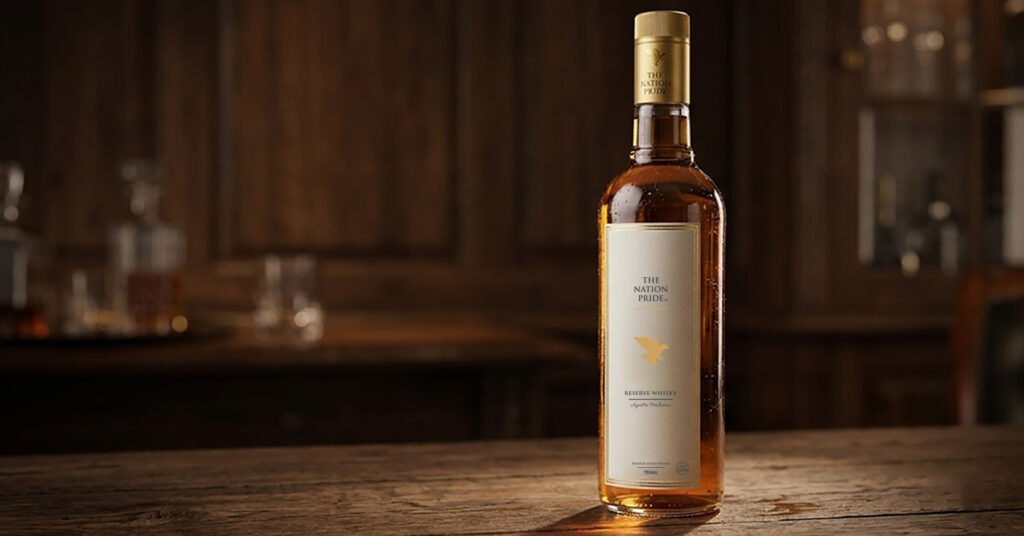
Picking up a whisky bottle can sometimes be challenging if you do not understand the information printed on its label. Whisky producers use terms such as “single malt,” “blended Scotch,” “ABV,” “reserve,” “cask strength,” and “age statement” on different bottles. But knowing such information would be beneficial, as it would help distinguish between different bottles. By learning how to read whisky label, you can understand its type, alcohol content, aging process, bottle volume, origin, and other essential product details. Additionally, it will enable buyers to differentiate between different whisky bottles using factual information rather than packaging and names.
Whether a buyer is looking for Indian whisky brands or other international varieties, knowing about the bottle labels can be an excellent starting point. In this article, we explain various terms, abbreviations, and label details that help customers compare different bottles.
1. Why Is It Important to Understand a Whisky Bottle Label?
A whisky bottle label provides important information about its contents. Even if attractive packaging and branding catch your eye, the printed information tells you about the whisky’s category, alcohol strength, volume, and other specifications.
Moreover, each kind of whisky follows different production guidelines. In this way, learning the terminology will enable you to differentiate between single malt and blended whisky.
The following are some of the reasons why the label becomes significant:
- Identification of the product: It enables one to identify the type of whisky.
- Alcohol percentage: This is provided by the label in terms of ABV.
- Information about the age: The manufacturer may include information about the product’s age.
- Bottle volume: It shows how much whisky is contained in the bottle.
- Origin of the product: The country or geographic location of the product is identified.
- Price comparison: It gives detailed information useful in price comparison of bottles.
Consequently, reading the label carefully makes it easier for you to learn about the product.
2. How to Read a Whisky Label: Understanding Brand Names and Categories
The brand name is normally among the most conspicuous details on the label of a whisky bottle. The name helps to indicate the business entity of the product. But then the brand name cannot tell us about the process and type of whisky.
For instance, two different brands can be of the same type of whisky. On the other hand, a single brand could also have several types of whiskeys.
How to Read a Whisky Label: Understanding Whisky Categories
The category tells you which type of whisky the producer sells. Some common classifications are:
- Single Malt Whisky: Producers use the term “single malt” for whisky made at one distillery using only malted barley.
- Blended Whisky: A mixture of various whiskies for the desired taste. from different distilleries but without any grain whisky.
- Single Grain Scotch Whisky: This is a whisky category that includes whisky made in one distillery, which is not single malt.
- Bourbon Whiskey: This is an American whiskey that must contain at least 51% corn as its grain.
- Rye Whiskey: Rye whiskey is a whiskey category that includes a certain percentage of the rye grain depending on the regulations in that country.
Note that ‘single malt’ is not the same as ‘single cask.’ Instead, it is used to refer to whisky that is made in one distillery. It is therefore crucial that you differentiate the production category from the brand identity.
3. What Does ABV Stand For on a Whisky Bottle?
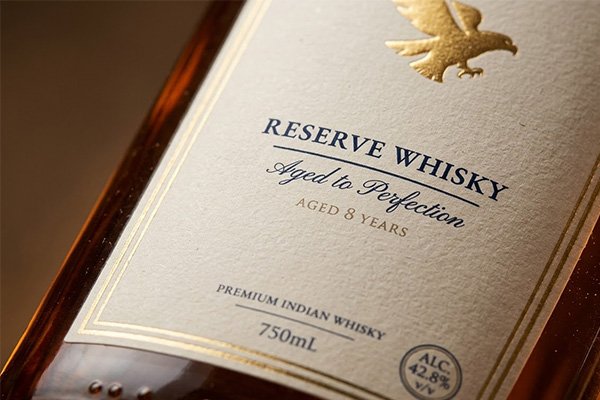
The term “ABV” is an abbreviation for “Alcohol by Volume.” This indicates the amount of alcohol in relation to the drink’s total volume.
Therefore, when you have a whisky with an ABV of 42.8%, this means that it has 42.8% alcohol by volume. Similarly, if you encounter a whisky with ABV of 40%, then it means that it has 40% alcohol by volume.
This becomes important because the percentage of alcohol in the liquor differs depending on the product.
Common ABV Names That You Will Come Across
- 40% ABV: A common whisky alcohol strength.
- 42.8% ABV: An alcohol strength used in some Indian whisky products.
- 43% ABV: Another alcohol strength that can be seen in various whisky forms.
- 46% ABV: Different whisky categories feature this alcohol strength.
- Cask Strength: Producers bottle whisky at or close to its original cask strength.
However, it is important to understand that the ABV does not denote the quality, age, or nature of the product.
Therefore, always be sure to cross-check the ABV before comparing any bottles.
4. How to Read a Whisky Label: Understanding Age Statements
The age statement tells you how many years the whisky has matured before the producer bottles it, according to the standards of its category.
Some of the whisky bottles will contain age statements such as “8 Years,” “10 Years,” “12 Years,” or “18 Years.” The numbers indicate the specified age of maturation of the whisky.
What Does 12-Year-Old Whisky Mean?
In the case of Scotch whisky, a 12-year age statement means that the producer has matured the youngest whisky in the batch for at least 12 years in oak barrels.
A bottle with a 12-year-old age statement could have whiskies aged for 12, 15, or 18 years. But the blender must ensure that the youngest whisky meets the stated age.
What Does NAS Stand For?
The meaning of NAS is No Age Statement. Producers use this terminology when they do not include an age statement on the whisky bottle.
But it doesn’t necessarily indicate that the whisky is young or poor. It only indicates that the producer has not put any age statement for the whisky.
Does Whisky Mature While in the Bottle?
Whisky usually stops maturing the moment it is bottled. In contrast to the whisky that is kept in oak barrels, bottled whisky cannot undergo the same maturation process.
Hence, a bottle bought even after several years will not be considered as matured whisky.
5. Know the Country and Region of Origin
Origin information will provide the geographical link of the whisky. Different countries have different traditions of manufacture, definitions of whisky categories, and labeling regulations.
Some of the countries where there are established whisky industries include Scotland, Ireland, India, Japan, and the United States.
Popular Sources of Whisky
- Scotch Whisky: The Scotch Whisky must be manufactured and aged in accordance with the Scotch Whisky legal definition requirements.
- Irish Whiskey: Irish whiskey producers must follow Ireland’s geographical and production requirements.
- American Whiskey: In the United States, several types of whiskies are produced, including bourbon and rye whiskey.
- Japanese Whisky: There are standards and geographical requirements for Japanese whisky.
- Indian Whisky: Indian Whisky producers manufacture various whisky categories in accordance with the product requirements and regulations of labelling.
Additionally, geographical names may have some legal significance. For instance, a producer cannot just refer to his whisky as “Scotch Whisky” if it doesn’t conform to the required definition of “Scotch Whisky.”
Thus, remember to distinguish between the name of the brand, its geographical source and the geographical name of the whisky type.
6. How to Read a Whisky Label: Cask and Maturation Details
There is much to be learned from the details provided about the cask. Sometimes, the producers disclose details regarding the cask used and what was in it before on the labels.
Different casks will affect the whisky in different ways, depending on the smell, color, and taste of the drink. However, the actual effect of the cask on the whisky depends on many factors.
Common Cask Whisky Terminology
- Bourbon Cask: This is a cask used before for bourbon aging. It may add vanilla, caramel, and oak notes.
- Sherry Cask: This is a cask known for sherry aging. It may have dried fruit, spicy, and nutty notes.
- Oak Cask: This is the use of oak wood when maturing the whisky.
- First-Fill Cask: This usually refers to a cask that has been used for the first time to mature the whisky after its previous content.
- Cask Finish: This is an additional aging process in other casks after the initial one.
But note that sometimes the cask information will not state the actual percentage of the whisky matured in each cask. Therefore, don’t assume that all the notes from a certain cask will be present in the final whisky.
7. What is the difference between single malt and blended whisky?
There are two types of whisky, which beginners often see on the labels of bottles.
Despite being of the same type, they represent two different methods of manufacturing.
Single Malt Whisky
Producers make single malt whisky at one distillery using only malted barley, according to the relevant production requirements.
Producers can combine whisky from different casks at the same distillery to create a single malt.
However, single malt doesn’t mean single cask.
Blended Whisky
Blended whisky is made with the purpose of obtaining certain style or taste characteristics of the beverage.
The blender selects grain or malt whisky components according to the blend’s category.
Key Differences
| Feature | Single Malt | Blended Whisky |
|---|---|---|
| Production | One distillery | May combine whiskies from multiple distilleries |
| Ingredients | Malted barley under the relevant category rules | Depends on the category |
| Casks | May combine multiple casks. | May combine different whisky components |
| Character | Reflects the distillery’s production style | Designed around the intended blending style |
Importantly, neither category automatically guarantees better quality. Both can offer distinctive characteristics depending on production, maturation, and blending decisions.
8. How to Read a Whisky Label: Understanding Bottle Size
Size of the bottle signifies the quantity of the liquid present inside the whisky bottle. This quantity is usually measured in milliliters (ml) or liters (L).
Common sizes of the bottles that are seen are as follows:
- 180 ml: Smaller bottle size.
- 375 ml: Medium-sized bottle.
- 700 ml: Commonly seen bottle size internationally.
- 750 ml: Commonly seen bottle size in various markets, including India.
- 1 liter: Large bottle size.
But the sizes of the bottle may differ from market to market and from product to product. Hence, always look for the quantity of the bottle specified on the bottle.
This factor is also useful in comparing the price of the products. For instance, the price of the 750 ml bottle and 1-liter bottle may be different, despite being of the same product line.
Hence, always compare the size of the bottle and the price shown.
9. What Does Natural Colour and Non-Chill Filtered Mean?
Some distilleries provide information about their production process on the label. These terms are usually used to specify the production process and not the type of whisky.
Natural Colour
Natural colour typically means that the distillery has not added colouring to the whisky.
Colour of the whisky may differ depending on the aging process and interaction with the oak cask during production.
Nevertheless, the darker colour is not necessarily an indicator of higher age or quality.
Non-Chill Filtered
Distillers use chill filtration to remove specific elements from whisky before bottling, which can cause cloudiness when cooled or watered.
Distillers do not subject non-chill filtered whisky to this specific filtration process.
Thus, some products may become cloudy upon cooling or watering. This characteristic is not a sign of any flaw in the product.
What Should Beginners Bear in Mind?
Both notions contain data related to production and presentation. However, none of them guarantees quality or the individual preference of a specific whisky.
10. Know Batch Numbers, Bottling Information, and MRP
Along with the brand and the type of whisky, the bottle could also contain information regarding its manufacturing and distribution.
These pieces of information would help identify the specific batch and provide useful purchasing information.
Some of the details that one should know include
- Batch or Lot Number: This helps identify a particular production or packaging batch and is useful for traceability purposes.
- Date of Manufacture or Packaging: This provides information regarding the manufacture or packaging date of the product.
- Bottled By: This identifies the entity responsible for bottling the product.
- Manufacturer: This provides information about the manufacturer of the product.
- Importer: Importers include this information on relevant imported products to identify the company responsible for importing them.
- MRP: The Maximum Retail Price indicates the price at which retailers must sell the product to consumers. In India, the MRP shown on the product is an important detail to consider while making purchases.
Furthermore, imported whiskies may also contain the relevant importer details along with the country of origin.
11. Common Whisky Label Terms Every Beginner Should Know
Whisky labels sometimes include technical expressions and marketing terminology. Understanding these words can make the reading process easier.
| Label Term | Meaning |
|---|---|
| Reserve | A product or expression name; it does not establish a universal age |
| Premium | A marketing or positioning term |
| Cask Strength | Whisky bottled at or close to its cask strength |
| Single Cask | Whisky from one individual cask |
| Small Batch | A limited selection of casks combined for a particular release |
| Finish | Additional maturation in another cask type |
| NAS | No Age Statement |
| ABV | Alcohol by Volume |
| Non-Chill Filtered | Whisky not subjected to chill filtration |
| Natural Colour | Indicates no added colouring to adjust the appearance |
| Distilled | Refers to the distillation stage of production |
| Bottled | Indicates the bottling stage |
However, some expressions do not have one universal legal definition across all countries. Therefore, understand the product category and applicable regulations before interpreting a particular term.
12. Common Errors That Should Be Avoided While Deciphering Whisky Labels
Often, people get wrong ideas about the labels on the bottles of whisky. However, Readers can avoid most interpretation errors by following some basic steps.
Error 1: A Bigger Number Implies Older Age
All numbers found on the bottles are not necessarily related to the aging of the beverage. Numbers may refer to many different attributes of the drink.
Error 2: Taking Single Malt to Mean a Single Cask Product
Single malt is an indicator of production at a particular distillery. Multiple cask beverages can be included in the single malt category.
Error 3: Taking a Higher ABV to Mean Better Quality
ABV means alcohol by volume. It is not an indication of quality.
Mistake 4: Mistaken Assumption that Darker Coloured Whisky is Older
Factors including cask properties may affect the coloration of the whisky. Hence, the color alone cannot determine the age of maturation.
Mistake 5: Muddling Up Brand Names and Place of Manufacture
The brand name alone does not guarantee the place where the whisky comes from.
Mistake 6: Failing to Consider Bottle Capacity
Comparison of the prices of different brands becomes misleading without consideration of the capacity of the bottles.
Considering these factors helps you analyze the labels better and makes your comparison credible.
13. A Simple Checklist for Reading a Whisky Label
Before comparing a whisky bottle, take a moment to review these important details:
-
Identify the brand name and whisky category.
-
Check the declared alcohol percentage or ABV.
-
Look for an age statement, if available.
-
Understand the country or region of origin.
-
Review any declared cask and maturation information.
-
Check the bottle volume.
-
Read the manufacturer, bottler, or importer details.
-
Check the applicable MRP and regulatory declarations.
-
Understand the meaning of special terms such as NAS and Cask Strength.
This simple approach makes it easier to understand the information presented on different whisky bottles.
14. Frequently Asked Questions About Whisky Bottle Labels
Q1. How can I read a whisky label for the first time?
You should start with brand name, whisky type, ABV, age statement, country of origin, and bottle capacity. Then look at any cask data and other production terms. They will give you a good picture about the product.
Q2. What is 42.8% ABV on the whisky bottle?
It means that this whisky includes 42.8% of alcohol by volume. The other part of the volume comprises water and other components, which are allowed to be included in the final product. ABV shows alcohol concentration, not the quality of the product.
Q3. Is the older age statement a sign of better whisky?
No. Age statement refers to the maturation period, but preferences of consumers and production parameters play their role too. So, age cannot be the criterion for which of two whiskies is better.
Q4. What is NAS on the whisky bottle?
It is an abbreviation of No Age Statement. This means that there is no age statement on the label of this product from its manufacturer. But NAS does not mean low quality and age of the product.
Q5. Is single malt whisky from one barrel?
No. The term “single malt” usually implies that the whisky comes from one distillery, made with malted barley in accordance with specific guidelines. Whisky producers can blend whisky from several barrels of one distillery.
Q6. What is the difference between ABV and proof?
Alcohol by volume (ABV) measures the amount of alcohol by volume. There is a second way of expressing the alcohol content called the “proof”. This method varies from country to country; for example, in the US proof is double the ABV percentage.
Q7. How to Read a Whisky Label: Common Cask Terms
Cask strength refers to whisky which is bottled either directly from or near to the strength it had in the cask without much dilution. It means that there is no set formula for bottling such whisky.
Q8. Why are whisky bottles differently coloured?
The colour of the whisky differs depending on oak maturation, the history of the cask, and the allowed colouring methods. This means that two similarly aged whiskies could have different colours. Color does not prove the age or quality of whisky.
Q9. What details should I look for on an Indian whisky bottle?
Look at the product details, alcohol content, capacity of the bottle, manufacturing or importing company, FSSAI information, if any, MRP, and all other related regulatory details. The answer will vary based on the product and the applicable regulations.
Q10. Does whisky have any expiry date after bottling?
Sealed well, whiskies usually do not expire after bottling but have an extended shelf life. They do not mature further once bottled.
Conclusion: How to Read a Whisky Label with Confidence
Recognizing the terms printed on whisky bottles plays an important role in understanding whisky classifications. For instance, brand names, ABV, age statements, cask types, and geographical details provide helpful information about each product. Moreover, these details help buyers compare different whiskies and understand their unique characteristics.
Furthermore, learning how to decipher whisky labels helps beginners avoid common mistakes. For example, single malt does not mean single cask. Similarly, ABV does not indicate quality, and whisky colour does not necessarily reflect its age. Therefore, understanding these terms allows buyers to make more informed comparisons.
In conclusion, always pay attention to the information manufacturers provide on whisky labels. Additionally, compare relevant product details and familiarize yourself with important whisky terminology. By following these steps, you can confidently understand and compare different whiskies.
