
Indian Whisky vs Scotch Whisky: Differences in Taste, Ingredients, Production & Price
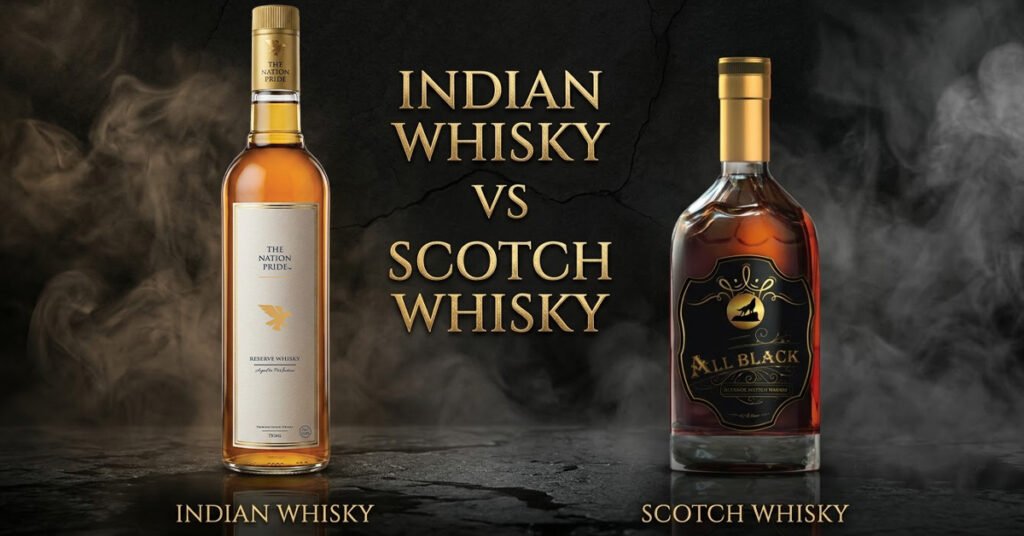
Whisky is associated with many centuries of artistry, regionality, and innovative manufacturing techniques. At present, Indian whisky vs Scotch whisky is becoming interesting for connoisseurs of whisky from all over the globe. Nevertheless, even though both types of beverages are representatives of the same general type of drinks, they vary according to their origins, materials used, quality criteria, maturation conditions, taste peculiarities, and marketing aspects.
Comparing Indian whisky vs Scotch whisky is a much more complicated task than finding out the origin of each beverage. Actually, the grain used, fermentation procedures, the machinery used for distillation, barrels used for maturation, and climate conditions influence the end result of making a whisky.
Moreover, there are distinctive manufacturing procedures used in the whisky industry in India, which integrate traditional experience and modern technologies. Besides, Scotland maintains certain rules of production, which preserve the identity of Scotch whisky.
This guide provides information on both types of drinks from technical and practical points of view. Moreover, the ingredients, production procedures, taste features, aging conditions, alcohol content, pricing, and other aspects of comparing whisky are explained in the guide.
1. Indian Whisky vs Scotch Whisky: Origins of Both Spirits
Geographical origins and production practices create the first major differences between these whisky categories.
Origin of Indian Whisky
“Indian whisky” is a broad term denoting spirits produced in accordance with Indian laws. In India, whisky production involves various agricultural ingredients and production practices based on the type of product and the producer.
Traditionally, Indian distilleries have developed production practices in relation to agricultural ingredients, production facilities, and customer preferences. Thus, there are various types of Indian whiskies like malt whisky, grain whisky, and blended whisky.
Additionally, the warm climate of India affects the maturation process, allowing the spirit to interact with the wooden casks. It leads to changes in aromas, flavors, and mouthfeel of whiskies.
At present, Indian distilleries further enhance their production capacity using better equipment and ingredients.
Geographical Origin of Scotch Whisky
Scotch whisky is produced only in Scotland. Geographical origin becomes an integral part of its definition according to the law.
According to the Scotch Whisky Regulations 2009, there are certain production and aging requirements. For instance, producers must make Scotch whisky in Scotland and mature it in oak casks there for at least three years.
Furthermore, the Scotch Whisky Regulations 2009 specify different types of Scotch whiskeys, such as Single Malt Scotch Whisky, Single Grain Scotch Whisky, Blended Malt Scotch Whisky, Blended Grain Scotch Whisky, and Blended Scotch Whisky.
Moreover, Scottish distilleries also follow different regional whisky-making traditions. Such whisky-making regions as Speyside, Islay, Highland, Lowland, and Campbeltown are famous.
Thus, geographical origin becomes an important factor while comparing these two whisky categories.
2. Indian Whisky vs Scotch Whisky: Different Ingredients for Different Drinks
It is important to know that different ingredients may affect the taste and properties of the whisky.
Although both types of products have agricultural ingredients, the choice of raw materials and techniques used to manufacture them may vary.
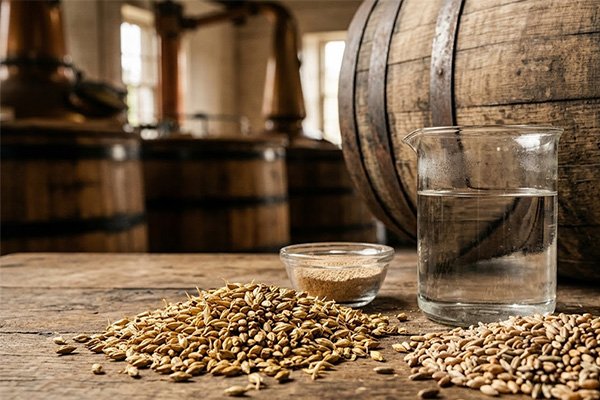
Ingredients of Indian Whisky
Depending on the type of product, Indian whisky manufacturing may use various agricultural raw materials.
Indian whisky manufacturers commonly use the following ingredients and raw materials:
- Malted barley: Source of fermentable sugar and flavors.
- Various cereal grains: Corn, wheat, and any other allowed grains may provide various characteristics.
- Neutral or rectified spirits: Some Indian whisky manufacturers include these spirits in their blends.
- Water: Good for mashing, fermentation, and dilution.
- Yeast: The yeast transforms the fermentable sugar into alcohol during the fermentation process.
- Oak barrels: Oak barrels add colour, flavour, and aroma to the whisky.
However, all Indian whiskeys do not have the same combination of ingredients. There are different ways of producing single malt, grain and blended whiskeys.
Ingredients Used in the Production of Scotch Whisky
There is a clearer manufacturing structure that Scotch whisky adheres to.
Scotch whisky producers use water, malted barley, and permitted whole cereal grains.
Some of the main ingredients used in the manufacture of Scotch whisky are as follows:
- Malted barley: Essential in making single malt Scotch whisky.
- Whole grains: Used in making grain Scotch whisky.
- Water: Used in the manufacturing process.
- Yeast: Causes fermentation of sugar into alcohol.
- Oak casks: Helps in the development of colour, smell, and age of the spirit.
Unlike some of the other types of whisky, Scotch whisky does not have added flavoring agents. However, there are some conditions in which water and caramel color can be used.
This means that the legal production framework gives Scotch whisky a unique identity.
3. The Process of Production of Indian Whisky and Scotch Whisky
Production methods play an important role in determining the final whisky profile. Even though there is fermentation and distillation in the process of production, the methods of production differ depending on the type of whisky.
Step 1. Grain Selection and Processing
Firstly, distilleries choose agricultural raw materials to be used for production.
In the case of the production of malt whisky, malted barley is usually selected. In the production of grain whisky, other types of cereals are used.
Then, manufacturers process grains to prepare them for mashing. This step helps extract fermentable sugars that will be converted by yeast to produce alcohol.
Step 2. Mashing
In mashing, manufacturers mix processed grains with water.
This process involves the extraction of fermentable sugars from the mixture of grains. Various factors impact the effectiveness of the extraction of sugar, such as temperature, quality of water, and others.
Yet, every distillery has its own technological process.
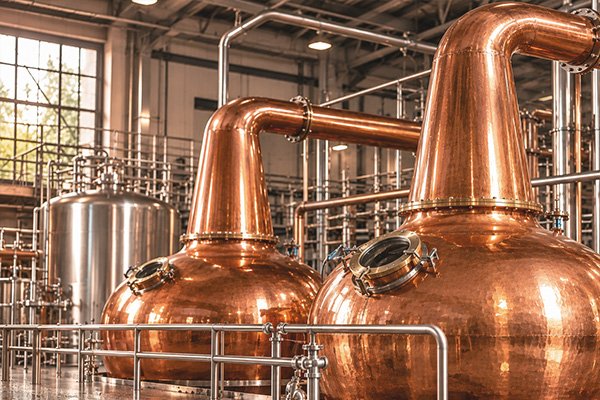
Step 3: Fermentation
Producers then transfer the mash into fermentation vessels.
During the fermentation process, Yeast converts sugars into alcohol and develops additional flavour compounds that shape the spirit’s overall character.
The length of time taken by fermentation, type of yeast used, temperature and fermentation vessels used may have an effect on the spirit produced.
Step 4: Distillation
Here, distillers separate and concentrate alcohol through distillation. Distillers use pot stills for malt whisky and column stills for continuous grain spirit production.
Step 5: Maturation and Blending
Next, producers mature or prepare the spirit according to the relevant product specifications.
Oak barrels will add vanilla, spice, wood, and other flavors to the mixture. In blended whisky, blending teams combine different spirits to achieve a consistent flavour.
Thus, each step of the production process adds to the final flavor profile of the whisky.
4. Indian Whisky vs Scotch Whisky: How Whisky Matures
Maturation is one of the most distinguishing aspects for the production of whiskies.
Although both categories use wooden casks, their regulations and climatic conditions create different maturation practices.
Indian Whisky Maturation Process
The weather in India is typically warmer than that of Scotland. This fact means that there are other ways of whisky maturation dependent on the distillery, its environment, and other factors.
Warm weather will affect the interaction between the spirits and oak and thus, the extraction of wood components and the formation of flavors.
A faster maturation process does not necessarily lead to higher quality or equivalence of aging years.
Indian distilleries have a variety of maturation methods dependent on the category of the whisky produced.
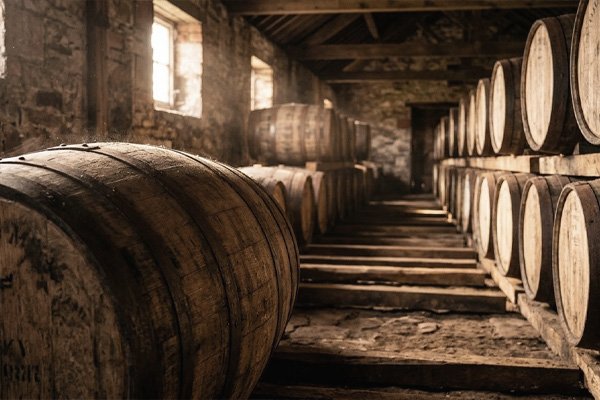
Whisky Maturation in Scotch
Scotch whisky producers must mature their whisky in oak casks with a maximum capacity of 700 litres in Scotland for at least three years.
Usually, the cooler climate of Scotland creates different maturation conditions from those of the warmer areas.
During maturation, the spirit interacts with the wood and develops additional aromas and flavours.
Distilleries select casks with different usage histories to develop distinctive flavour profiles.
The question is, what is the angel's share?
As part of the maturation process, the wooden cask releases a small amount of alcohol through natural evaporation. The angel’s share is the name given to this evaporation process by most whisky manufacturers.
This process is affected by factors like temperature, humidity, ventilation, and the type of warehouse used.
Therefore, maturation will influence the quantity and quality of the final product.
5. Indian Whisky vs Scotch Whisky—Tasting
One of the most distinguishing features of any whisky comparison is taste. Neither variety can be distinguished by a unique flavor profile, as each product can vary.
Common Flavoring Qualities of Indian Whisky
Depending on the materials used in production and the way Indian whisky is produced, it can provide many flavors.
For instance,
- Grain and malt-like flavorings.
- The sensation of vanilla and caramel.
- Oak and mild spice flavors.
- A fruity and sweet aroma.
- Flavoring that is warm and round.
Some Indian single malts can also have a complex combination of dried fruits, nuts, spices, and woods.
In addition, the flavoring qualities of Indian blended whiskies can differ depending on the spirits’ composition.
Flavours of Common Scotch Whisky
Scotch whisky can be enjoyed in a variety of flavour profiles as well.
Some common features are
- Malty and creamy flavors.
- Vanilla and honey.
- Dried fruits and orchard fruit notes.
- Oakiness, spiciness, and nuttiness.
- Smokiness and peatiness.
- For example, some Islay whiskies are noted for their smokiness and medicinal characteristics, whereas most of the Speyside whiskies have fruity and malty flavour profiles.
These, however, are the common trends of particular regions only.
What Makes Them Taste Different?
Various elements affect their taste:
- Ingredients used and grain makeup.
- Choice of yeast and fermentation time.
- Equipment for distillation process and conditions applied.
- Environmental conditions during maturation.
- Oak used and history of cask.
- Formulation process of blend.
Thus, a comparison between two particular bottles is far more useful than a comparison between categories of national whiskies.
6. Indian Whisky versus Scotch Whisky—Types and Classification
Whisky classifications help consumers understand the contents and production methods of their bottles.
Categories of Indian Whiskies
There are different types of Indian whiskies that are classified based on their production process.
Indian Single Malt Whisky
In this category, malted barley is used for making whisky without using any additional grains. Production takes place at a single distillery through pot stills using Indian standards.
Indian Single Grain Whisky
Single-grain whisky is made through fermentation using malted or unmalted grains and production at a single distillery. Single malt whisky is excluded from single-grain whisky along with the following blends.
Indian Blended Whisky
In blended whisky, there are different spirits that are mixed based on standards and product classification.
Scotch Whisky Categories
Scotland recognizes five principal categories:
| Category | Meaning |
|---|---|
| Single Malt Scotch | Malted barley, pot stills, one distillery |
| Single Grain Scotch | Produced at one distillery but not classified as single malt |
| Blended Malt Scotch | Combination of at least two single malt whiskies from different distilleries |
| Blended Grain Scotch | Combination of at least two single grain whiskies from different distilleries |
| Blended Scotch | Combination of one or more single malts and single grain whiskies |
These classifications help distinguish the production method and composition of different Scotch products.
Importantly, single malt does not automatically mean that a whisky is superior to blended whisky. Both categories can demonstrate excellent production standards.
7. Indian Whisky & Scotch Whisky: Alcohol Percentage and Intensity
Alcohol percentage is described as the amount of pure alcohol in the drink.
It is measured in terms of alcohol by volume, or ABV.
For instance, a beverage labeled as 42.8% ABV has 42.8 ml of pure alcohol per 100 ml of the beverage.
Indian Whisky Alcohol Percentage
There are various levels of alcohol in different types of Indian whiskies, depending on the product or regulation requirements.
Some of the common Indian whiskeys contain an ABV of around 42.8%.
Thus, it is important that consumers check the alcohol percentage on the bottle.
Scotch Whisky Alcohol Percentage
All Scotch whiskies should have a bottling strength of not less than 40% ABV.
Some of the Scotch whiskies come in ABV of 40%, 43% or 46%. But there are some cask-strength varieties that are highly alcoholic.
Does Higher ABV Indicate Better Quality?
Alcohol percentage in whisky is not a sign of high quality.
The presence of high ABV cannot guarantee that the whisky has been made from high-quality ingredients or that it was well aged and has complex taste.
Rather, customers should consider all aspects of the whisky.
8. Indian Whisky v/s Scotch Whisky: Pricing Discrepancy in India
Pricing is yet another aspect to consider while contrasting the two types of whiskies.
However, pricing of any product ultimately does not depend only on the country of manufacture or manufacturing cost.
Factors Affecting the Pricing of Indian Whiskies
The pricing of Indian whiskies can be affected by a number of aspects, including:
Choice of raw materials.
- Costs associated with production and distillation.
- Duration of aging process and cost of barrel.
- Costs involved in packaging and distribution.
- Marketing costs.
- State-level excise duties and taxes.
Factors Affecting Scotch Whisky Prices
Imported Scotch whisky may involve additional expenses, such as:
- International transportation.
- Import duties and applicable taxes.
- Importer and distributor margins.
- Packaging and storage.
- Brand positioning.
- Age statements and cask selection.
Furthermore, limited releases, older expressions, and special cask finishes can increase the retail price.
Indian Whisky vs Scotch Whisky Price Comparison
| Comparison factor | Indian Whisky | Scotch Whisky |
|---|---|---|
| Production location | India | Scotland |
| Raw material costs | Depends on ingredients | Depends on ingredients |
| Maturation costs | Depends on casks and conditions | Depends on casks and conditions |
| Import expenses | Generally not applicable to domestically produced whisky | Can apply to imported Scotch |
| Taxation | State-specific Indian taxation | Import and Indian state taxation may apply |
| Retail price | Varies by brand and state | Varies by brand, age, and state |
Why Does the Same Whisky Cost Differently in Different States?
Not all the whisky products have the same retail cost in India.
Various factors such as excise policy, taxes, distribution policy, and retail laws affect the pricing of the product.
Therefore, for comparisons to be accurate, people need to compare products of the same volume within the same time frame and location.
The retail price of a 750 ml bottle in one state is likely to be different from that of another state.
9. Quality Evaluation: What Defines Good Whisky?
Consumers should evaluate more than the brand label, country of origin, and retail price when assessing whisky quality.
Whiskies from both India and Scotland can have varying degrees of complexity, balance, and consistency in their production process.
Quality of Raw Materials
High-quality raw materials serve as a basis for the right spirit.
Selection of grain, malt quality, water quality, and handling of raw materials might affect the production process.
Fermentation and Distillation Control
Consistent fermentation assists producers to get the desired characteristics of the spirit.
Distillation control determines which compounds end up in the spirit.
Maturation and Cask Aging
The quality of the cask used and the maturation process will affect the growth of aroma, color, and flavor.
Additionally, the effect of spirit and wood interaction may increase complexity with time.
Consistent Blending
Consistent blending of spirits involves selecting different spirits.
Proficient blending teams work to create a consistently good flavor profile for all batches of production.
Quality Assurance
Distilleries conduct laboratory tests and sensory assessments to maintain product quality.
This helps manufacturers check consistency and specifications of production.
Ultimately, a good Indian whisky would give a great experience, just like a good Scotch. The quality of an individual bottle does not lie in its country of origin.
10. What to Understand from an Indian Whisky/Scotch Whisky Bottle Label
The producer chooses not to display a specific maturation age on the bottle. The bottle label communicates important information about the product.
Nevertheless, the consumer should know the terms used before any comparison can be made.
Key Points to Look for
1. Whiskey Classification: Classify the whisky to know if it is a single malt, a single grain, or a blend.
2. Alcohol Content: Get information about the alcohol content in the whisky on its label.
3. Origin of Production: Check whether the whisky is manufactured in India or in Scotland.
4. Age Claim: Check for any claims related to the age of the maturation process.
5. Size of the Bottle: See different sizes such as 180 ml, 375 ml, and 750 ml.
6. Producer Details: Look at details of the manufacturer and bottler of the whisky, among other information provided.
7. Ingredients Information: Look at the information about the ingredients in the label.
Meaning of NAS
NAS stands for No Age Statement.
This is a situation where the producer fails to indicate any maturation age on the label.
But that doesn’t mean the product has not matured. The minimum age requirement of the Scotch whisky still applies.
An age statement, in case of Scotch whisky, means the age of the youngest whisky in the bottle.
11. Indian Whisky vs Scotch Whisky—Common Misunderstandings & Facts
A number of misunderstandings exist amongst consumers concerning these two forms of whisky.
We shall discuss some of them.
Misunderstanding 1: The Superiority of Scotch Whisky over Indian Whisky
Reality: Place of production does not affect the quality of the product; processes of production, materials, aging, and blending are equally significant.
Misunderstanding 2: Molasses is always present in Indian Whisky
Reality: There are different varieties of Indian whisky. Some may contain malted barley or other cereals or spirit composition.
Misunderstanding 3: Older whisky is better than younger one.
Reality: Although older does not mean tastier in this case, the process of cask, maturation, and spirit quality is also significant.
Misconception 4: Scotch Whisky Tastes Smoky
Truth: Although peated smoke is characteristic of some Scotch whiskies, many Scotch whiskies do not contain a smoky taste at all.
Misconception 5: High Price Means High Quality
Truth: Price includes not only production costs but also taxation, import duties, packaging costs and other costs involved.
Misconception 6: Single Malt Is Always Better Than Blended Whisky
Truth: There are two categories of whisky production, and their quality will depend on production practices and final spirit.
12: Indian Whisky Vs Scotch Whisky: Whom Should You Opt For?
It will depend on personal preferences and product features.
Understanding Product Features
Before comparing them, you should take into account the following issues:
- Flavor: See what flavors your whisky has (fruity, malty, smoky, sweet, and spicy).
- Production category: See what is the difference between single malt, grain, and blended whiskies.
- Maturity: The maturity level of the product should be considered along with the age of the product.
- Alcohol Content: Consider the percentage of alcohol content in the product as not all whisky has the same alcohol content.
- Price: Consider the price of the product in your state.
- Product Transparency: Consider the manufacturer of the product and its packaging.
The Importance of Personal Preferences
For example, some people research Indian single malt whiskies to understand how Indian distilleries operate malted barley and local maturation conditions.
Scotch whiskies offer various styles and categories.
Blended whiskies also can be investigated for different spirit mixes.
Therefore, the best comparison lies in particular product analysis.
Frequently Asked Questions
Q1. What is the principal distinction between Indian whisky and Scotch whisky?
The principal difference is associated with the geography of origin, legislation related to production, raw materials, and maturation. Indian whisky is manufactured according to Indian norms and includes various kinds of products. In turn to begin, Scotch whisky should be made and aged in Scotland under Scotch Whisky Regulations.
Q2. Is there any difference between Indian single malt whisky and Scotch single malt whisky?
There are some differences. In particular, both categories imply the same raw material (malted barley), the same type of distillation (pot still distillation), and production in one distillery. However, the geography of origin, legislation, and maturation environment are different for both types.
Q3. Is there any minimum period of maturation for Scotch whisky?
There is such a minimum age of maturation. Scotch whisky producers must age their whisky in Scottish oak casks for at least three years. Moreover, there are special requirements concerning the volume of casks and conditions of maturation. Still, producers may keep their whisky longer.
Q4. Why can Scotch whisky be more expensive than Indian whisky in India?
The cost of imported Scotch whisky may include international transportation, import taxes, distribution cost, and respective state taxes. Moreover, branding, cask choice, age statement, and scarcity of product may influence retail price. Yet, all Scotch whiskies are not more expensive than all Indian whiskies.
Q5. Is there a chance for Indian whisky to compete with Scotch whisky?
The whiskeys produced in India have the potential to be of high quality and create unique flavor profiles as well as undergo maturation process that is well-controlled. Furthermore, the majority of Indian distilleries concentrate on keeping their quality standard and consistency. Nevertheless, quality cannot be determined by the country from which whiskey originates. On the contrary, it depends on a number of aspects including ingredients used, distillation, maturation process, blending, and quality control.
Conclusion
The comparison between Indian whisky vs Scotch whisky clearly shows that both types differ in terms of geographical identity, production standards, raw materials, and maturation environments. To begin with, Indian whisky offers a varied range of production styles, including single malt, single grain, and blended whiskies. Moreover, Indian distilleries use locally available ingredients and modern production techniques to create these whiskies. In addition, the warm Indian climate influences the maturation process and contributes to the development of distinctive flavour profiles.
On the other hand, Scotch whisky follows a well-defined set of production rules that preserve its Scottish identity. For example, these regulations specify the production location and require a minimum maturation period. However, it would be incorrect to assume that either category is automatically superior because of its geographical origin. Instead, factors such as ingredients, distillation, fermentation, blending, maturation, and quality control determine the characteristics of individual whiskies. Therefore, consumers should consider the production methods and flavour profiles of each whisky rather than judging quality based on origin alone.
